

Every dental practice website features the same stock photo of a smiling patient who appears unreasonably happy about being at the dentist. Beyond that, most have a services page, an about us, and a contact form. Then the practice signs up for a dental SEO service, the phone stays quiet, and the agency sends a report about keyword rankings. The problem is not the practice. The problem is a strategy built around what agencies can measure easily rather than what patients actually do before they book.
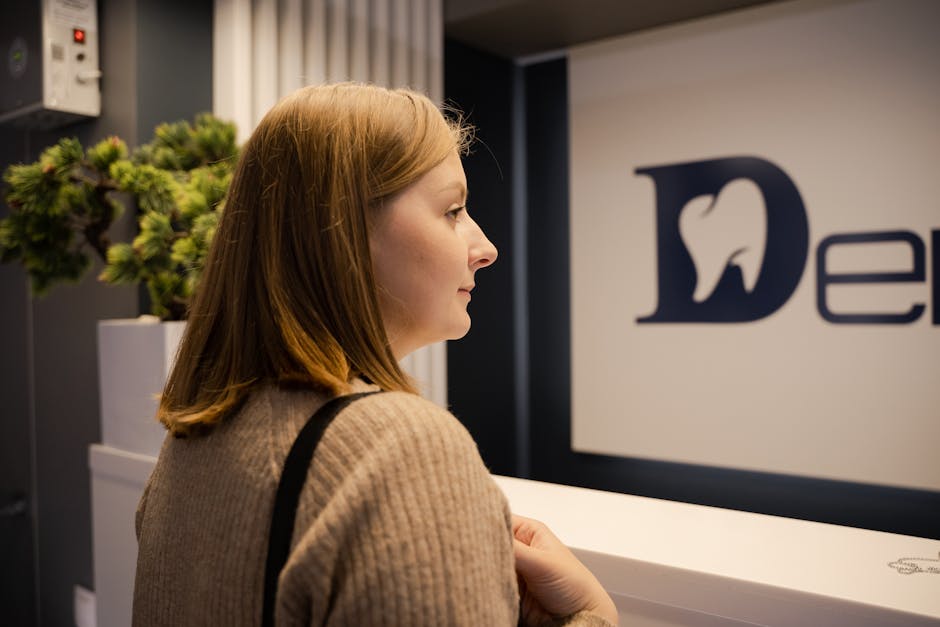
Photo: Pavel Danilyuk via Pexels
Why most dental practice websites underperform on search
Most dental websites are brochure sites. They describe the practice, list the treatments, show the team, and give the address. None of that is wrong. The problem is that it does not answer the questions patients actually type into Google before deciding where to go.
The late-stage searches — "dentist Dundee", "private dentist near me" — are contested by established local practices and directories with years of accumulated authority. The earlier-stage searches are where the gap is: "is it worth going private for dentistry", "how much does a dental implant cost in Scotland", "what is the difference between composite and porcelain veneers". These have lower competition, genuine commercial intent, and they reach patients before they have chosen a practice. That content is almost entirely absent from most dental websites.
Most practices already have reasonable traffic. What they do not have is content that converts a curious visitor into a booked appointment. That is a conversion problem, not a visibility problem — and it is the pattern that repeats across every professional practice we have worked with over 12 years.
The local SEO foundation every dental practice needs
For most practices, the highest-leverage starting point is not a content strategy. It is a well-maintained Google Business Profile. The practice that actively manages its profile — correct categories, all services listed, regular posts, a consistent stream of reviews — wins the map pack over the one that set it up in 2022 and has not touched it since.
Review volume and recency both matter. A practice with 40 reviews averaging 4.7 stars will outperform one with 200 reviews averaging 4.2 stars in map pack visibility more often than not. Recency signals activity — a practice whose last review was eight months ago looks less relevant to Google than one that received three last week.
Local citation consistency — your practice name, address, and phone number matching exactly across Google, your website, any NHS listing, and local directories — is a foundation requirement. Inconsistencies suppress local rankings. It is a one-time fix, but one that many dental websites have never had done properly.
What dental SEO content actually moves bookings
Treatment-specific pages are where most practices underinvest. A page about "dental implants" that describes the treatment in general terms will not rank ahead of a page that covers what is involved at each appointment, typical costs, recovery timelines, and when implants are or are not the right option. Patients searching for a dental treatment in Scotland are often apprehensive and researching carefully. Answering their questions thoroughly earns both the ranking and the trust needed to book.
The connection between specific searches and the page that receives them matters just as much. A patient searching "dental implants Aberdeen" clicks a result and lands on a generic homepage with a slideshow and a phone number. They leave immediately because the page does not match what they were looking for — and that exit sends a relevance signal to Google that suppresses the ranking further. Pages that match specific search intent convert; pages that do not cost you twice, in lost patients and lost positions.
Content around treatment decisions — "NHS versus private dentist", "composite versus porcelain veneers", "do I need an implant or a bridge" — generates organic traffic with high conversion intent and almost no competition from established sites. These are the pages a well-structured SEO and content service builds first, because they compound over time and are genuinely difficult for competitors to replicate quickly.
Dental SEO service costs and realistic timelines
Meaningful organic growth takes around 6 months from the point where technical work is done and content is being published consistently. Local SEO and technical fixes can produce earlier results, but a sustainable pipeline from organic search is a medium-term investment. Practices expecting significant results in 30 days are either targeting very low-competition terms or working with an agency that is overstating what the channel can deliver at speed.
Budget: below £2,000 per month, the work required to cover technical SEO, local optimisation, and content production properly cannot be done at the pace needed to move the needle. Practices with multiple locations or in highly competitive cities need to invest proportionally more to achieve results at the same rate as a single-location clinic in a smaller catchment.
The metric that matters is new patient enquiries from organic traffic — not keyword rankings, not sessions, not impressions. Rankings are a means to an end. A dental SEO agency that delivers page-one positions without demonstrating their connection to booked appointments is measuring its own KPIs, not yours. Our analytics and reporting service is built to show exactly what organic traffic produces in terms of contact volume, so the investment is always connected to an outcome you can see.
If you are weighing up SEO against paid search for patient acquisition, the same framework applies as for any local professional services practice. Our post on SEO for professional service firms covers the paid-versus-organic decision in detail.